
A Turning Point in Platform Rules: From "Default to the Buyer" to "Evidence Decides"
The "refund-only" mechanism was originally designed to address low-quality products and slow after-sales responses. However, in the hands of professional abusers, it has evolved into a channel for keeping both the goods and the money. Regulators have now explicitly required platforms to stop misusing refund-only rules, and courts have begun holding malicious refund-only fraudsters criminally liable. As a result, platform dispute resolution has shifted decisively: the party with a complete evidence chain wins.
For merchants, the core of counteraction comes down to one question: can you present a complete, clear, and order-correlated evidence chain at the moment of appeal?
This turning point is a substantial benefit for compliant sellers. In the past, merchants often lost refund-only disputes simply because they could not produce evidence in the form platforms recognize — even when they were in the right. Now that the balance tips toward evidence, whoever objectively documents the packing process holds the initiative in every dispute. This is precisely why a growing number of sellers in categories such as jewelry and gold, footwear, and 3C accessories are deploying professional packing-station monitoring: these categories combine high product value, numerous accessories, and high return rates, where a single dispute loss can exceed the cost of a monitoring device.
Why Appeals Fail: Three Types of Invalid Evidence
Reviewing a large number of after-sales disputes, appeal failures cluster into three patterns:
Written statements only, no visual proof. Claims such as "we inspected the item before shipping" do not constitute evidence in platform review.
Video exists, but details are indistinguishable. Conventional warehouse surveillance is mounted far away at unfavorable angles — product condition and accessory counts are unrecognizable, proving nothing about the outbound state of the goods.
Video cannot be correlated to the order. Without tracking-number binding, a buyer's single claim — "that's not my parcel" — collapses the entire chain.
Valid evidence must satisfy three conditions simultaneously: key details are recognizable, the courier tracking number is bound to the order, and the recording runs uninterrupted from product display to box sealing and labeling.
The Three-Step Countermeasure Process
Step 1: Self-check before rejecting. Upon receiving a refund-only request, first retrieve the packing video for that order. If the video is complete and the product condition is clearly visible, reject the request decisively; for orders without video, weigh the product value before deciding whether to contest.
Step 2: Assemble the evidence package. Appeal opportunities are limited — submit all five items at once: the full packing video (including the tracking-number scan), the courier pickup receipt, the logistics delivery record, the buyer chat history, and the outbound warehouse record.
Step 3: File the appeal and follow up on review. Follow the "reject refund → submit evidence" path, and state the contradiction directly in your description — for example: the buyer claims non-delivery, yet logistics shows personal sign-off and the video shows the parcel sealed and labeled intact. If the first ruling is unfavorable, request a platform review and re-present the evidence chain.
Appeal Timing and Execution Details
Timing is the most overlooked element of the process. After an after-sales notice is issued, platforms typically give merchants only a few hours to respond; missing the window is treated as tacit acceptance of the refund. The chain of "receive notice → retrieve video → reject request" must execute immediately, not the next morning. This is where automatic archiving by tracking number proves its value: when a dispute arrives, the corresponding video can be located within seconds by number search, without wasting the response window searching through drives.
When describing contradictions, use a fact-versus-fact structure. If the buyer claims "goods not received," submit the signed delivery record alongside the video segment showing the tracking-number scan. If the buyer claims "missing accessories," submit the clip of accessories being counted into the box one by one. Pairing each claim with verifiable footage measurably improves both review speed and approval rates.
Keep the tone restrained and factual throughout. Reviewers process large volumes of disputes daily; a well-organized evidence presentation is far more persuasive than an emotional complaint.
The Five-Step Evidence SOP
The foundation of every successful countermeasure is laid at the moment of packing. This is the standard packing-and-shipping evidence procedure:
Product display — present the product to the camera from every side; condition and details fully in frame;
Scan and bind — scan the shipping label to bind the courier tracking number to the video; the number corresponds to the order;
Accessory display — count every accessory, manual, and gift item into the box on camera, neutralizing "missing accessory" claims;
Seal and label — record the sealing and labeling actions without interruption, locking in the outbound condition;
Archive — the video is automatically archived by tracking number to local storage, retrievable instantly when a dispute arises.
When shipping via ERP, the recording software runs alongside the ERP system: scanning the label lets the ERP locate the order and the recording starts automatically — packers perform no extra steps.
Notably, this SOP deliberately excludes the picking process. The decisive dispute points — what was shipped, what was included, and how it was sealed — all converge at the packing table. Focusing the recording there keeps evidence effective while keeping video volumes manageable, and with local storage (HDD/TF card) as the primary medium, long-term operation creates no storage burden.
Equipment Options
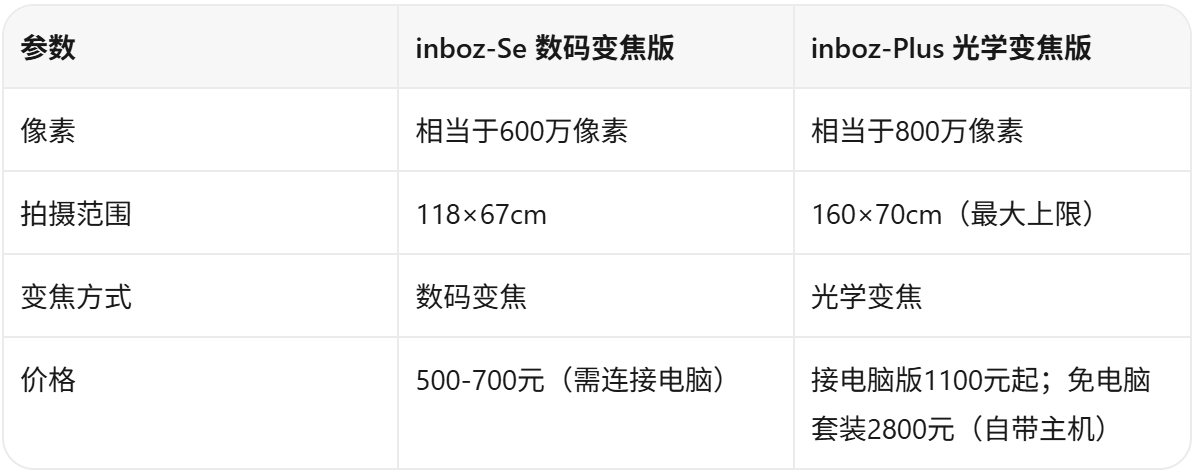
For high-value, multi-accessory, high-return-rate categories such as jewelry and gold, footwear, sporting goods, cosmetics, and 3C accessories — as well as women's apparel and livestream clothing — the inboz-Plus optical zoom version is recommended. One common misconception deserves clarification: 4K is not the right target for packing-station monitoring. Large files consume storage and cause stuttering; the zoom method matters far more than resolution when the goal is legible detail.
Frequently Asked Questions
Q1: The buyer received the goods but filed a refund-only request claiming non-delivery, while logistics shows signed delivery. What should I do?
This is the most typical contestable scenario. Reject the request and submit the signed delivery record; in the appeal package, the video segment showing the tracking-number scan proves that the parcel bound to that number was sealed and shipped intact. The two pieces of evidence together refute the claim.
Q2: The buyer claims the product "does not match the description," but the shipped item matches the listing exactly.
Rely on the product-display segment: the item is shown on camera from every side before packing, with condition and model markings in frame. Submit the video clip alongside listing screenshots in the appeal.
Q3: The order has no packing video (a historical order). Is an appeal still possible?
You can attempt to combine the pickup receipt, outbound record, and chat history — but approval rates are significantly lower without visual proof. This is why packing evidence should be embedded into daily operations as early as possible: legacy orders cannot be backfilled, but new orders are protected from the day of deployment.
Q4: Can staff hold up a phone to record packing instead of using a device?
As a short-term stopgap, yes; as a long-term practice, no. Manual recording depends on staff discipline — missed recordings, shaky footage, and omitted accessories are hard to eliminate, and videos cannot be automatically bound to tracking numbers. The value of a packing-monitoring device is converting evidence retention from "dependent on people" to "dependent on process."
Q5: How do I manage the growing number of video files?
With automatic archiving by tracking number, videos correspond to orders one-to-one with no manual naming. Local storage (HDD/TF card) is the primary medium; simply plan the retention period according to your dispute-response needs.
Conclusion
Refund-only abuse is not frightening — facing it without evidence is. Making the five-step evidence SOP part of your fulfillment workflow is the first move of e-commerce evidence compliance in 2026.